
Recovery and sleep are just as important as the other key aspects of golfing. Being a critical part of helping young golfers perform at their best, quality sleep helps a golfer’s physical and mental development, from muscle repair to better concentration.
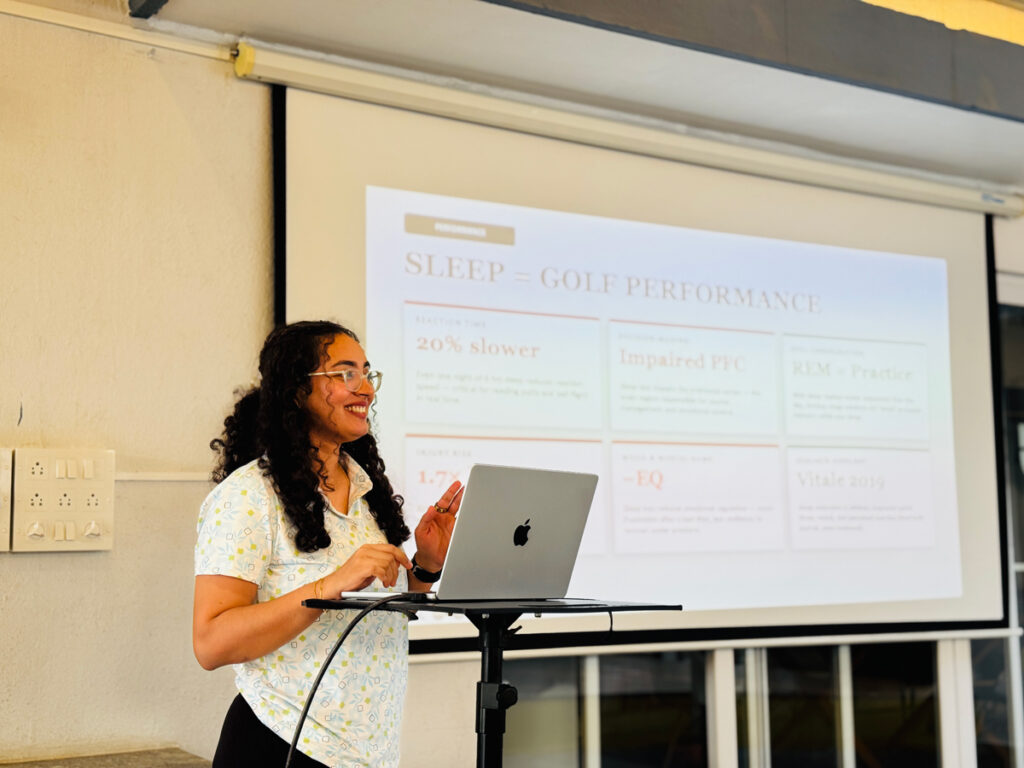
TSG Academy‘s Sports Nutritionist Vedashree Bhatt conducted an informative session to educate the young golfers on the link between sleep, recovery and sports performance, acknowledging the importance of the same. The session looked at what happens to us when we sleep, how lack of sleep impacts our performance and most importantly, simple habits that can help young athletes improve their sleep routines.
Understanding the 4 R’s of Recovery
There are four simple principles to recovery. They are:
- Rest
- Refuel
- Rehydrate
- Rebuild
All four are important, but sleep is still the key to allow the body to recuperate after training. In the session, Vedashree explained the role of sleep in repair of muscles, restoration of energy and development of physical and mental development. It also helps the brain process information and recall the skills learned during practice. Young golfers are constantly learning new techniques and improving their game, so quality sleep is an essential part of their training routine.
She stressed that recovery should not be seen as separate from training. Instead, it should be seen as an essential part of an athlete’s daily routine.
What happens when we sleep?
Two important processes control sleep: one is sleep pressure, and the other is the body’s internal clock.
The longer we stay awake, the more sleep pressure there is. It’s a chemical called adenosine that builds up in the brain and makes us feel sleepy. The circadian rhythm is the body’s natural 24-hour clock. It reacts to light and darkness to help regulate hormones like melatonin and cortisol.
Vedashree also said that sleep has different stages, and each stage serves a specific purpose. They are:
- Light sleep: Aids the body in moving towards deeper sleep.
- Stage 2 sleep: Aids in memory and learning.
- Deep sleep: Helps the body physically recover and helps muscles repair and grow.
- REM sleep: Important for memory, learning and emotional processing.
Each stage plays a role in the body’s recovery. The message behind keeping a healthy sleep cycle was clear when she said that enough sleep allows the body to go through these stages and complete the processes needed to prepare for the next day of training.
How poor sleep impacts golf performance
Lack of sleep does much more than just lower your energy. It can reduce concentration, slow reaction time and make it more difficult to make decisions on course.
Vedashree also points out that a single bad night’s sleep can slow reaction times by approximately 20%. The session also noted that a poor sleep routine can increase the chances of injury by 1.7 times.
These effects can translate into difficulty staying focused, reacting quickly to changing situations and maintaining consistency throughout a round for golfers. A brief loss of focus can impact your shot choices and your game overall.
How much sleep do young golfers need?
Younger athletes need plenty of sleep to support their busy schedules and growing bodies. How much sleep young athletes need varies by age. Here are some ideal sleep recommendations:
- Young children 6 to 10 years of age must sleep for 9 to 12 hours, including naps.
- 8-10 hours of sleep at night; a 30-60 minute nap is possible for 10- 18 year olds
- Adults and older teens require 8 to 9 hours of sleep every night, plus an optional daytime nap of 30 to 60 minutes.
Vedashree also recommended that if golfers think of taking a nap during the day, they should ideally do it before 3 pm. This helps to avoid the daytime naps from interfering with their normal nighttime sleep schedule.
Simple ways to get better sleep
Improving sleep quality doesn’t always need big changes in lifestyle. A few little habits can go a long way.
Vedashree gave several practical suggestions that young golfers can add to their daily routine. She suggested that players:
- Try to keep the same bedtime and wake-up time, even on the weekends.
- Try to get 5-10 minutes of morning sun to help the body’s internal clock.
- Keep the bedroom environment cool and comfortable, ideally between 18-20°C.
- Eat dinner 2 hours before you go to bed.
- Stop caffeine after 2- 3 pm.
- Switch off screens at least an hour before you go to bed.
- Avoid any vigorous exercise or activity in the 2-3 hours before you go to bed.
- Have a relaxing wind-down, such as reading or listening to calm music.
Additionally, young players who share rooms with fellow athletes should be aware of the sleeping habits of their roommates. Everyone can contribute to a comfortable sleeping environment by minimising noise and other unnecessary disturbances.
Dealing with sleep on the road
Travel and changing time zones may interfere with sleep patterns, particularly for golfers playing in tournaments far from home.
To help adjust, Vedashree suggested gradually adjusting sleep schedules by about 30 minutes a day in the direction of the destination time zone. Morning sunlight, familiar sleep items, and white noise can also help create a comfortable sleeping environment.
She also cited melatonin as an option, which should be done with caution, under supervision and only when needed, as it can cause daytime drowsiness.
Can food help you sleep better?
This was another important segment of this discussion with the young players. What you eat can also affect how well your sleeping cycle is. During the session, Vedashree talked about some foods which contain tryptophan, like bananas, pumpkin seeds and protein-rich foods, that help the body’s natural sleep processes.
Kiwi and tart cherry juice also have the potential to help you towards better sleep. Another option that was discussed during the session was magnesium glycinate. Supplements, however, are not a substitute for a nutritious diet or healthy sleeping habits. It is also a good idea to avoid eating lots of sugar or fat just before you go to bed.
Vedashree told young golfers to be mindful of their overall nutrition and understand how their daily food choices can complement their recovery routines.
Include sleep in your training
For young golfers, performance improvements are more than just time on the driving range or the putting green. What happens after those practices is also equally important. Creating a good sleep routine early also helps young athletes establish habits that will help them long after their sports careers are over.
Make small changes, get into a routine and give your body the rest it needs. We hope these insights will help you understand the importance of sleep in a better way and with the hope that all budding players incorporate these recovery tips as part of their golfing routine. Keep learning, keep practising, and keep golfing!