
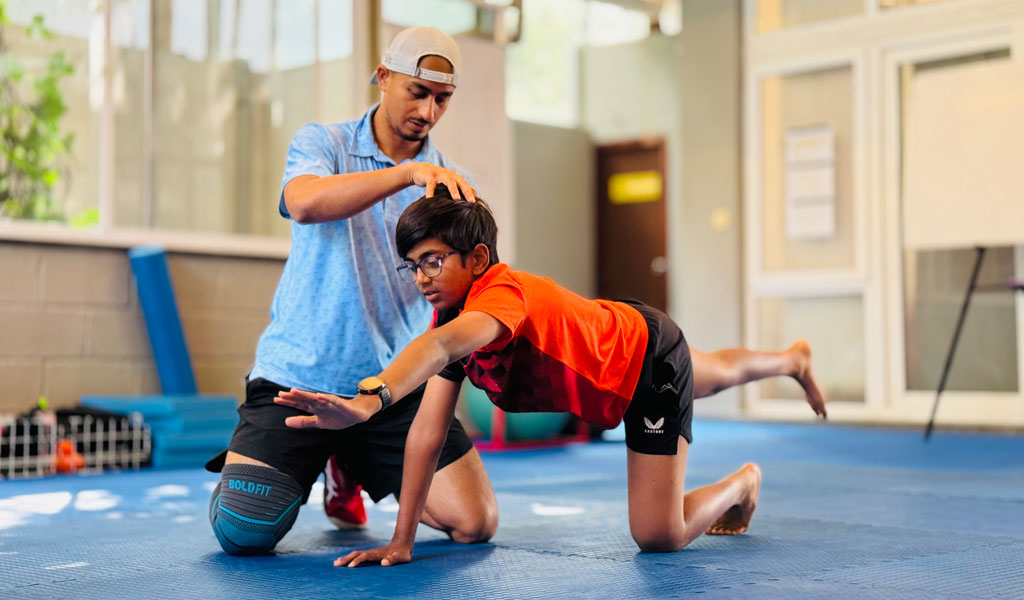
Although golf may not appear physically demanding on the outside, every athlete is aware of the strain it puts on the legs. The lower body is continuously stressed during strength exercises, walking long distances, generating power through the ground, and balancing on uneven surfaces. For consistency, longevity, and safe performance on the greens, it is essential to identify the indicators of injury and the pain it causes. The players learnt to recognise warning signs, understand high-risk areas, and manage discomfort effectively during the most recent TSG athlete education session. This blog summarises one of our latest player meeting, which focused on empowering golfers to understand their pain and make wise choices.
Training Pain: The Anticipated “Blue Zones”
The main lower-limb muscles, including the quadriceps, hamstrings, adductors, glutes, calves, shin muscles, and foot stabilisers, are often referred to as the blue zones of the body. After strenuous leg days, intense practice, balancing exercises or walking steep golf courses, these areas of the body frequently get sore. The glutes, calves, shin muscles, inner and outer thighs, and other common pain areas were quickly identified by athletes. After some really rigorous training, even the little foot muscles and the groin also have high chances of getting hurt.
These “blue zones”— the areas where pain is typical and often associated with exertion, travel, stiffness, or rugged terrain – are where this kind of discomfort occurs. For instance, players who sit for extended periods while travelling often experience stiffness in the front and inner regions of their knees. In a similar vein, players who have participated in steep courses like Gokarna may feel pain in their shins or feet.
And here’s a word of relief- these feelings are not to be worried over; they get better with regular movement, relaxation, hydration, and mobility exercises.
Red Flags: When Pain Requires Quick Care
Even though soreness is common, not all pain should be dismissed. Finding “red zones” of the body, that are the areas where discomfort suggests a more serious condition, was one of the primary goals of this players’ meet. The knee joint, particularly the joint line, was thoroughly discussed by our Head of Sports Science- Sumit Bhandari. The joint line between two tiny dimples beneath the patella was the focus. Direct discomfort along this joint line is a clear sign of more serious issues, such as a meniscal injury or ligament involvement. This pain, unlike muscle soreness, cannot be ignored or put off.
It was also noted that tendon soreness around the knee, especially where tendons join bones, could be dangerous. Tendinopathy or irritation that needs treatment may be indicated if these sore spots worsen with movement or persist for many days. This awareness helps sportsmen distinguish between visible discomfort and problems that require prompt reporting.
Knowing Why some Ankle Sprains are worse than others
One of the most lively topics of conversation was ankle sprains. The common lateral ankle sprain, in which the ankle slides outward, is encountered by the majority of golfers. Although these sprains are common, they usually heal well with the proper treatment. The players were a little amazed to discover that medial ankle sprains, which occur on the inside of the ankle, are considerably more dangerous. These affect the deltoid ligament, which needs more attention and heals more slowly.
When pain travels from the outside of the ankle to the centre and then to the inside, it becomes more significant. Additionally, players also learnt to distinguish between bone and muscle discomfort. It is a serious warning sign if applying pressure to the bone after a sprain hurts. However, if the pain is in the softer green areas of the body i.e., muscles and tendons—it is probably the result of overuse or exhaustion, which is frequently brought on by lengthy rounds or unfamiliar terrain.
What is and is not Normal Foot Pain
In golf, the feet bear a great deal of strain. The foot muscles may be strained by carrying equipment, walking for extended periods, or stabilising slopes. In the past, many golfers who participated in challenging courses complained of pain across the arches or at the ball of the foot. This is quite common and typically comes into the category of “expected soreness.”
However, pain on the foot’s bony surfaces, particularly following a twist or abrupt movement, is a warning sign that has to be addressed right away. The distinction is crucial since delaying treatment of a bone-related problem can significantly impede recovery.
Understanding the Distinction Between Injury and Stiffness
Sumit addressed that it is very common for golfers to experience joint stiffness after travel, prolonged sitting, or even after wearing a cast. This usually has nothing to do with an injury and gets better with mobility exercises. On the other hand, deeper joint structures may be involved if stiffness develops after a fall, a twist, or a collision during sports.
The goal of this meeting was to help the young players recognise these differences so they can respond appropriately, rather than discounting significant discomfort or presuming that all discomfort is bad.
Accepting Accountability: Making Wise Choices as an Athlete
An essential reminder regarding accountability and awareness was given as the discussion moved towards the end.
Sumit advised the young players not to withdraw from the tournaments if their body experiences mild discomfort. Only when pain is real and connected to the red-flag zones mentioned, the withdrawal can be justified. When reporting pain to coaches or physiotherapists, players were also asked to speak clearly and use the appropriate terminology. In addition to aiding in correct diagnosis, this demonstrates the athlete’s understanding of and commitment to their own body.
In conclusion, raise awareness and safeguard performance
This TSG session made it clear that while joint line pain, bone tenderness, and medial ankle sprains need to be treated right away, soreness is common, stiffness is treatable, and overuse symptoms often resolve on their own.
Every TSG athlete can train more effectively, compete with confidence, and prevent needless injuries just by understanding these differences. With a stronger, safer, and more knowledgeable lookout to their game, golfers can push themselves when necessary, halt when required, and ultimately perform at their best. We hope we were able to deliver an understanding about your body and its terminology as required for a sportsperson. For any futher information, you can connect with our fantastic team who are here to guide you in every way we can!
Happy Golfing!