
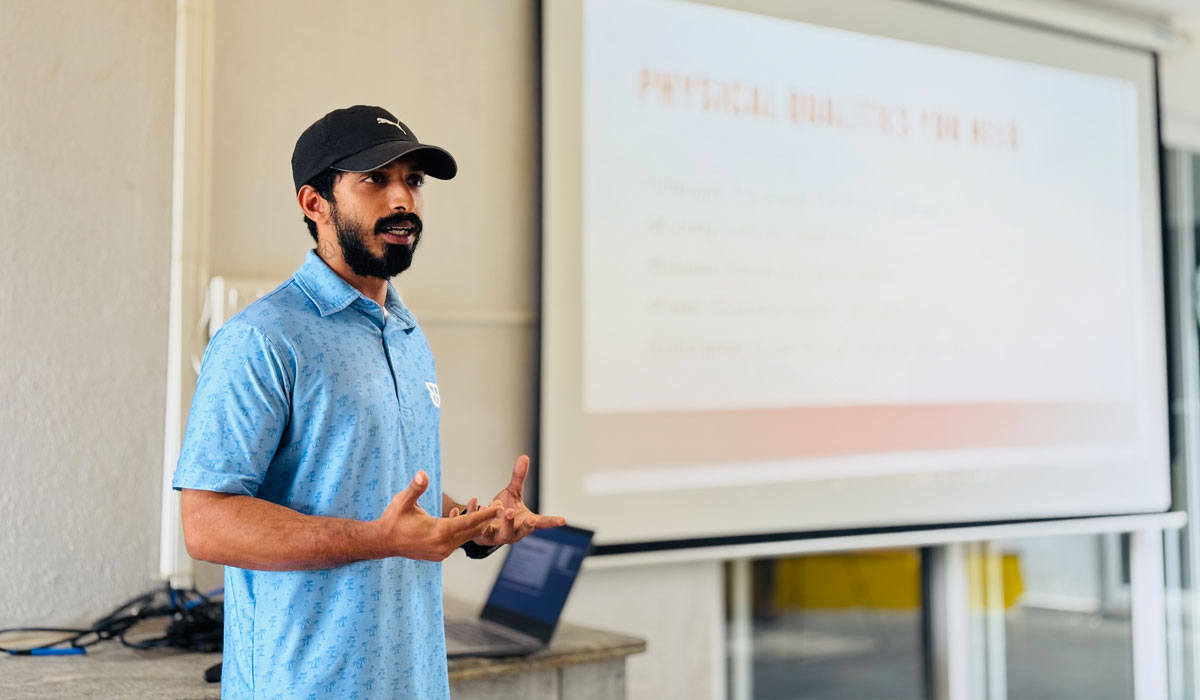
Gaining proficiency in grip, posture, and swing mechanics is only one aspect of developing a young golfer. A young athlete must first acquire the physical skills necessary for effective, coordinated, and strong movement before they can understand the nuances of golf. A young athlete’s long-term success is significantly influenced by these fundamental skills, commonly referred to as Fundamental Movement Skills (FMS).
FMS serves as the foundation that supports both performance and general physical well-being, regardless of whether a young player aspires to play competitive golf or wants to enjoy the sport with confidence.
What Does Young Golfers’ Athletic Development Mean?
Building the body’s innate capacity to move, balance, coordinate, and produce force is the primary goal of athletic development, particularly in the early years. Fundamental Movement Skills, a collection of basic motor abilities that every kid should ideally acquire in their early years of sport, are at the centre of this.
These abilities can be divided into three main groups:
- The ability to move
motions that facilitate movement of the body include-
- Running
- Jumping
- Avoiding
- Hoping
Kids learn rhythm, agility, and body control through these physical activities, which help produce smoother, more coordinated golf motions.
- Balance and Stability Skills
movements in which the body is controlled either slowly and deliberately or when immobile are-
- Maintaining equilibrium
- Twisting
- Stretching
- Bending
Every golf swing depends on the player’s ability to control their center of gravity, which requires extraordinary stability. You must know that having a good balance results in more control over movement patterns and more reliable ball striking.
- Object Control Proficiency
abilities involving the handling or manipulation of items include activities like-
- Throwing
- Catching
- Kicking
- Striking
Although golf is a unique sport, object-control abilities significantly impact hand-eye coordination, reaction time, and spatial awareness—qualities crucial for young players to develop.
Why Do Basic Movement Skills Matter So Much?
Basic movement abilities are essential for sport-specific growth, particularly in golf, and serve a purpose beyond physical fitness.
Here are a few ways in which a young golfer’s performance is directly impacted by FMS:
- Improved Balance for a Consistent Swing
Maintaining balance is crucial when swinging a golf club. A strong and controlled swing is made possible by improved lower-body stability brought forth by a well-developed FMS.
- Enhanced Body Awareness and Coordination
A golfer needs to know how every part of their body moves when they swing. FMS enhances neuromuscular networks, resulting in more fluid and effective movement patterns.
- Increased Range of Motion via Flexibility and Mobility
Rotational flexibility through the hips, spine, and shoulders is necessary for a solid golf swing. Young athletes can execute a complete, adequate swing more easily thanks to FMS’s focus on full-body mobility.
- Long-Term Athletic Achievement
Strong foundational skills help kids acquire new skills more quickly, adjust to training better, and be less likely to get hurt.
In conclusion
Long before a young player picks up a club, the process of becoming a proficient golfer starts. Gaining a solid foundation in fundamental movement skills guarantees that young golfers develop into self-assured, strong, and well-rounded athletes. Parents and coaches at TSG provide young athletes with the foundation they need—not just for golf, but for lifelong athletic success. With involvement in multiple sports movements, promoting active play, and seeking advice from coaches, nutritionists and the entire TSG family, we support and nurture a happy golfing environment.
Keep Golfing!