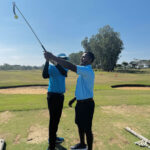

Physical conditioning and swing mechanics are only a small part of TSG Academy’s athlete development model. An important factor in performance sustainability is educating the players with the right knowledge. And this is practised at TSG Academy through our player meetings, nutritional support, and a well-structured sports science department to guide them with the best!
Rashmi Attarde: the residential Sports Physiotherapist at TSG Academy, facilitated a thorough discussion on injuries, including how they happen, how to spot them early, and how to react effectively, during a recent players meet. Players asked insightful questions about real-life situations they encounter during practice and competition.
What exactly is an Injury?
Rashmi started by clarifying common misconceptions among athletes regarding injuries. A visible rip or fracture is only one aspect of an injury. Injury is any state in which the body is unable to perform at its best due to trauma, overburden, or repeated stress.
Until discomfort becomes serious, many athletes try to ignore it. However, before the structural damage occurs, injury shows up slowly through minor signs of tightness, fatigue, or restricted movement. Preventing long-term problems requires an awareness of this early stage of possible injury- which many athletes often neglect.
Acute vs Chronic: The Difference in Onset
The distinction between acute and chronic injuries was one of the first topics discussed in the session.
Acute injuries happen all at once and are frequently brought on by severe experiences. Common examples of such situations include a twisted ankle, a tumble, or a direct blow while playing. Usually, these injuries cause pain, oedema, and a loss of function right away.
Conversely, chronic injuries occur gradually. Poor mechanics, inadequate recovery, or recurrent stress are the triggers for them. For instance, repeated swings that consistently overburden the shoulder can eventually cause pain and inflammation.
Understanding Inflammation: The Body’s Repair Mechanism
Then the session moved towards another aspect of injuries- which is inflammation. Rashmi stressed that inflammation is the body’s normal healing reaction and is not the enemy. Damaged tissue is repaired with the aid of increased blood flow and immunological activity.
However, recovery may be slowed if inflammation persists for an extended period due to ongoing overload. It was advised that athletes distinguish between temporary inflammatory reactions and chronic swelling, which indicates continued stress.
Soft Tissue Injuries: Muscles, Tendons and Ligaments
Then was the turn of soft tissue injuries which can occur in the muscles, tendons and ligaments. Since soft tissue structures are most frequently affected in sports, a significant portion of the conversation focused on them.
Muscle Injuries
Overstretching or overloading muscles can result in strains. According to Rashmi, injuries frequently occur during eccentric contractions, which occur when a muscle lengthens under tension. This is especially important for sports that require explosive transitions or controlled deceleration like golf. In general, muscle injuries are rated according to their severity:
- Grade 1: Involves slight overstretching
- Grade 2: It is a partial tear
- Grade 3: Total breakdown occurs here
All these are the results of unexpected load increases, fatigue and poor warm-ups.
Tendon Injuries: The body uses tendons to connect muscles with bones through their natural function. The body needs time to heal completely after an injury because incomplete recovery leads to degeneration and inflammation. Athletes tend to ignore their initial tendon pain because they believe it will pass. The permanent nature of tendon problems becomes evident when proper load control procedures remain unexecuted.
Ligament Injuries: Ligaments serve as stabilizing elements which maintain joint stability. The stabilizing structures face the risk of suffering strains or tears when subjected to twisting motions or hyperextension or sudden directional changes. Rashmi explained that proprioception, which helps the body detect its joint position, serves as the main method for preventing ligament injuries.
Your body awareness impairment leads to decreased joint stability and increased risk of injuries. The ligament injuries lead to two main types of damage which include:
- An impacted fracture happens when strong compressive stress forces both sides of a bone to meet at the fracture point.
- Spiral fractures occur because of twisting forces while bending forces create both transverse straight and oblique diagonal fractures.
- A complete fracture is one which occurs when a bone breaks into two distinct parts. It is also called an open fracture. In this, the broken bone extends outward through the skin which usually results in bleeding.
- A comminuted fracture results in multiple bone fragments which break away from the main bone structure.
Rashmi explained the healing process for complete and comminuted fractures which have extensive structural damage takes the longest time to complete.
Hard Tissue Injuries: Fractures and Joint Disruptions:
Joint dislocations and bone injuries were also discussed in the session. Direct trauma or prolonged stress can cause fractures. Because growth plates are more susceptible, young athletes, especially those in development periods, need to exercise caution.
Shoulder dislocations piqued players’ interest. Rashmi explained that although a dislocation occurs when a joint is pushed out of alignment, it does not always indicate a total rupture of the ligaments, particularly in highly mobile joints like the shoulder.
Knowing the difference between a subluxation (partial displacement) and a dislocation enables athletes to react effectively rather than in a panic.
Soreness vs DOMS: What’s Normal and What’s Not?
One of the most relatable parts of the session was understanding the difference between muscle soreness and DOMS.
Soreness
- Happens during or immediately after exercise
- Caused by metabolic by-products
- Resolves quickly
DOMS (Delayed Onset Muscle Soreness)
- Occurs 12- 48 hours after exercise
- Caused by microscopic muscle fibre damage
- Peaks at 24–72 hours
- Common after eccentric exercises
Understanding this difference helps players avoid mistaking normal adaptation for injury. Athletes benefit from this insight by avoiding needless worry and by not ignoring actual injuries.
Early Warning Signs you should never Ignore
Rashmi placed a strong emphasis on proactive awareness near the end of the session. Rarely can injuries occur suddenly. The body uses tiny signs to communicate what it is experiencing.
Players were urged to keep an eye on 5 early warning signals that usually go unnoticed during the initial phases of occurrence of injuries. They are:
- Increasing pain during or after the practice
- Changes in body movement patterns
- Soreness in the body lasting beyond 48–72 hours
- Reduced performance consistency
- Emotional cues like irritability or hesitation
Early detection of these body signals enables quick action, load adjustment, and quicker recovery plans for players.
The Bigger Picture: Education as Prevention
Understanding is the first step towards preventing injuries, which was the session’s most potent takeaway. While strength training, technical training, and recuperation techniques are all important, awareness is the cornerstone. At TSG, we continue to create all-rounder athletes by teaching them how inflammation works, how injuries occur, and how tissues respond to stress.
Sessions like this reinforce a culture where players talk early and don’t hide their discomfort.
TSG makes sure that scientific knowledge, sustainable load management, and athlete-first care stand as foundations of performance excellence through the right education.
Happy golfing!